

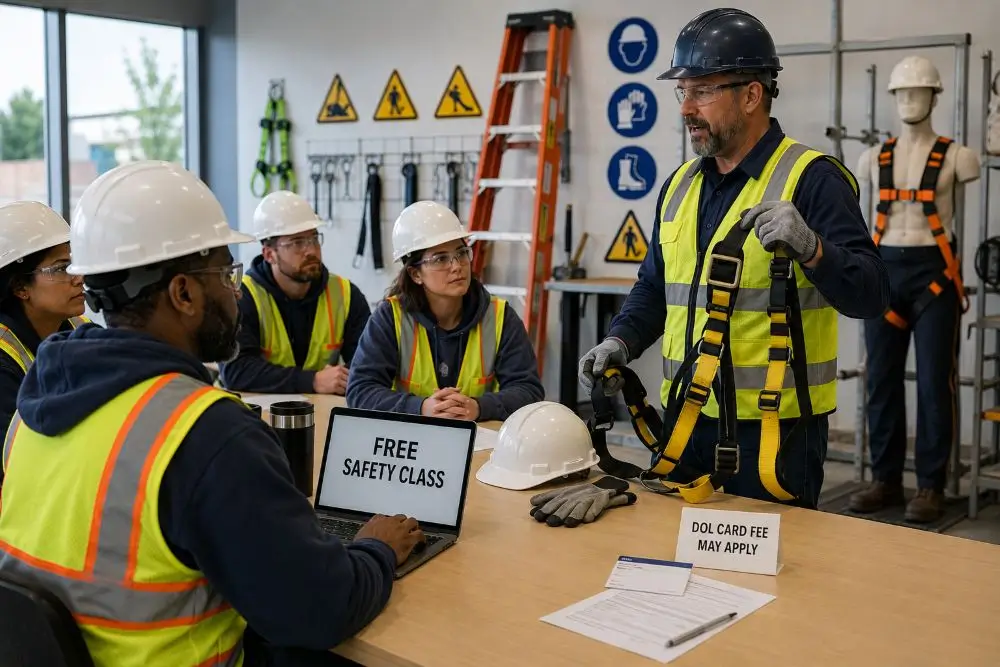
Construction remains one of the most hazardous industries, making safety education an essential part of every worker’s career. Whether you’re just entering the field or looking to strengthen your knowledge, learning about workplace hazards, personal protective equipment (PPE), fall protection, and emergency procedures can help reduce the risk of injuries and improve overall job site safety. Fortunately, there are several organizations and programs that make construction safety education more accessible by offering free or low-cost training opportunities.
However, it’s important to understand what “free” really means when it comes to OSHA-related training. While many providers offer educational materials and online courses at no cost, not all free programs include an official Department of Labor (DOL) OSHA card upon completion. Knowing the difference between free learning resources and recognized OSHA Outreach training can help you choose the option that best fits your career goals and certification needs.
The Reality of Free Training vs. Paid OSHA Cards
As you begin exploring free construction safety classes, you’ll quickly notice that some providers advertise free OSHA training while others charge a fee. The difference often comes down to whether the program includes an official OSHA Outreach completion card issued by the U.S. Department of Labor. While the educational content itself may be offered at no cost, obtaining a DOL card typically involves administrative, processing, and provider-related costs that are not covered by free training alone.
For example, FreeOSHACourses.com allows learners to access OSHA training materials free of charge, making it an excellent option for individuals who want to build their safety knowledge without an upfront investment. However, the free training does not include an official DOL OSHA card. Trainees who wish to receive a Department of Labor card after completing the course are required to pay the applicable fee for card processing and issuance.
Understanding this distinction can help you avoid confusion when comparing different training providers. If your primary goal is to expand your safety knowledge, free courses can be a valuable resource. But if an employer requires proof of completion through an official OSHA Outreach DOL card, you’ll need to choose a provider that offers authorized training and be prepared for the associated certification costs unless those costs are covered by an employer, scholarship, or another sponsoring organization.
Top Government Resources: OSHA’s Susan Harwood Grants
While free online courses are a great starting point, they aren’t the only way to access safety education. Government-funded initiatives also play an important role in making construction safety training available to workers, employers, and community organizations across the United States.
One of the most recognized programs is OSHA’s Susan Harwood Training Grant Program, which provides funding to nonprofit organizations, educational institutions, employer associations, and labor groups to develop and deliver occupational safety and health training. These grants are designed to reach workers in high-hazard industries, including construction, with a particular focus on underserved and at-risk populations. Depending on the organization that receives the grant, eligible participants may be able to attend OSHA-related safety courses at no cost.
In addition to the Susan Harwood grants, workers can also benefit from safety initiatives offered through OSHA’s regional offices, state occupational safety and health programs, workforce development agencies, and community organizations. Since available training opportunities vary by location and funding cycle, it’s worth checking with local OSHA offices or workforce centers to learn about free or subsidized construction safety classes in your area.
Scholarship Programs
Beyond government-funded initiatives, scholarship programs offered by training providers can make OSHA education even more affordable. These programs help reduce financial barriers for individuals who want to gain valuable safety knowledge and earn recognized credentials for career advancement.
One example is the scholarship program offered by OSHAOutreachCourses.com. The program is designed to help make OSHA Outreach training more accessible to a wide range of learners, including fresh graduates entering the workforce, military veterans transitioning to civilian careers, new employees, and individuals looking to strengthen their workplace safety qualifications. Depending on eligibility, applicants may receive financial assistance that significantly lowers the cost of training.
The current scholarship program is open for applications through December 31, 2026, giving eligible candidates ample time to apply and take advantage of the opportunity. For individuals who need an official OSHA Outreach course but are concerned about the cost, scholarship programs like this can be an excellent way to receive quality training while reducing out-of-pocket expenses.
Local and State-Sponsored Community Safety Programs
Not every free construction safety class is offered online. Many state and local organizations regularly host workshops, seminars, and short-term training programs that help workers build practical safety skills. These programs are often funded through public agencies, workforce development initiatives, community colleges, labor unions, or nonprofit organizations, making them an excellent option for individuals who prefer hands-on learning or instructor-led sessions.
You can find free or low-cost safety training through:
- State OSHA programs (in states that operate their own OSHA-approved plans)
- Community colleges offering workforce development and skilled trades courses
- Local workforce development boards that provide job readiness and safety training
- Construction trade unions and apprenticeship programs with safety education for members and apprentices
- Nonprofit organizations and community centers that receive public funding to deliver workplace safety education
Checking with these organizations periodically can help you discover new training opportunities as funding and course availability often change throughout the year.
Free Online Libraries and Open-Access Learning Portals
If your goal is simply to improve your understanding of workplace safety, there are plenty of free online resources available beyond formal OSHA courses. While these platforms typically don’t award an official OSHA Outreach DOL card, they can help you strengthen your knowledge of construction hazards, safety regulations, and industry best practices.
Some of the most useful learning resources include:
- OSHA’s official website, which provides free publications, fact sheets, eTools, and safety guidance.
- NIOSH (National Institute for Occupational Safety and Health) resources covering workplace research, hazard prevention, and educational materials.
- CPWR – The Center for Construction Research and Training, which offers free construction safety guides, toolbox talks, and training resources.
- University and public educational platforms that publish open-access workplace safety courses, webinars, and instructional materials.
- Safety organizations and industry associations that regularly release free checklists, videos, and downloadable learning resources for construction professionals.
These resources are excellent for expanding your knowledge, staying informed about current safety practices, and reinforcing what you’ve learned through formal training programs.
How to Verify the Legitimacy of Free Training Providers
Before enrolling in any free construction safety course, take a few minutes to verify the provider’s credibility. Check whether the training is offered by a reputable organization, clearly explains what is included, and specifies whether it provides an official OSHA Outreach DOL card. Remember that, unless an employer, grant, scholarship, or another sponsoring organization covers the cost, free safety training typically does not result in a Department of Labor (DOL) card. Understanding these details upfront can help you choose a program that aligns with both your learning needs and career requirements.
Conclusion
Free construction safety classes are an excellent way to build essential workplace safety knowledge without a significant financial investment. From government-funded initiatives and community programs to online learning portals and scholarship opportunities, there are numerous resources available to help workers improve their skills and stay safe on the job.
At the same time, it’s important to understand the difference between free educational content and official OSHA Outreach certification. While many providers offer free training materials, an official DOL card generally requires a fee unless it’s covered by a sponsor or scholarship. By researching your options carefully and selecting a trusted training provider, you can gain valuable safety knowledge while choosing the certification path that best supports your professional goals.