

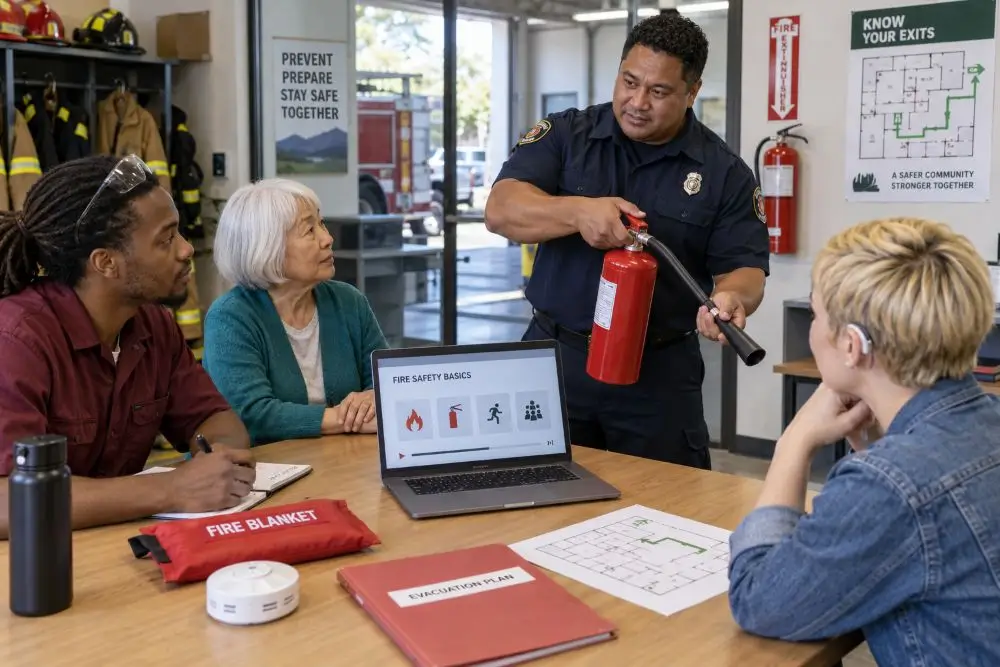
Fire safety training helps people understand how to prevent fires, respond to emergencies, and protect themselves and others when a fire occurs. Whether in a workplace, school, or home, knowing how to recognize fire hazards and respond appropriately can make a critical difference during an emergency.
For those looking to build basic fire safety knowledge without paying for a course, several organizations provide free online training and educational resources. These options can be useful for employees, employers, students, and anyone who wants to improve their understanding of fire prevention and emergency response.
Government & Emergency Management Resources
Government agencies and emergency management organizations are useful places to find free fire safety education online. Their materials are generally designed to provide practical guidance on fire prevention, emergency response, and workplace safety without requiring a paid course.
FEMA and the Emergency Management Institute (EMI) offer online courses and educational resources covering emergency preparedness, response, and related safety topics. Some courses are available at no cost and can be useful for individuals who want to build basic emergency management knowledge.
OSHA provides free fire safety and workplace safety materials that cover topics such as emergency action plans, fire prevention, evacuation procedures, and related employer responsibilities. These resources can help employers and employees understand key workplace fire safety requirements.
Local fire departments may also provide free online fire safety programs, videos, guides, and educational materials. Availability varies by department, but these resources can be particularly useful because they often address practical fire prevention and emergency response in the local community.
Massive Open Online Course (MOOC) Platforms
MOOC platforms can provide another way to learn fire safety online, with courses ranging from basic fire prevention to more detailed workplace safety topics. However, course availability, pricing, and whether a certificate is included can vary, so learners should check the current course terms before enrolling.
Alison offers free online courses covering fire safety and related workplace topics. Learners can access course materials without paying for the training itself, although certificates or diplomas may involve an additional fee.
Udemy has both free and paid fire safety courses and training modules. Free options can be useful for introductory learning, while paid courses may provide more comprehensive content or additional features.
Coursera and edX offer courses from universities and other institutions, and some courses may allow learners to access course content without purchasing a certificate. Availability and free-access options differ by course, so it is important to check whether the course provides the level of training and documentation required for your purpose.
Nonprofit & Industry Association Offerings
Nonprofit organizations and industry associations can also be valuable sources of free fire safety education. These resources often focus on practical prevention, emergency preparedness, and workplace awareness.
The National Fire Protection Association (NFPA) provides a wide range of fire safety articles, guides, videos, and educational materials. While not all NFPA training is free, its free resources can help individuals and organizations understand common fire hazards and prevention practices.
The American Red Cross offers free preparedness and safety resources covering topics such as home fire prevention, emergency planning, and response. These materials are particularly useful for building general fire safety awareness.
Occupational safety organizations and professional institutes may also provide free webinars, articles, guides, and introductory training. These resources can be useful for workers and safety professionals looking to supplement their existing knowledge.
Commercial Providers Offering Free Audits & Basic Modules
Some commercial training providers offer free introductory fire safety content as part of their online learning platforms. These may include short courses, basic modules, demonstrations, or webinars that introduce key fire prevention and emergency response practices.
Safety consulting firms may also host free webinars or educational sessions covering workplace fire safety and emergency preparedness. Community organizations and healthcare training academies can provide additional free resources, particularly for industries where emergency response and fire prevention are important.
Before relying on a free course for workplace compliance, check whether it meets the specific training requirements of your employer, industry, or applicable regulations. Free educational content can be useful for learning, but it does not automatically qualify as required compliance training.
What to Look for in a Free Online Course
Not every free fire safety course provides the same level of information or training. Before enrolling, learners should check the course content, the type of certificate offered, and whether the training is relevant to their specific needs.
Course Content & Covered Topics
A useful introductory course should cover essential fire safety concepts, including the fire triangle, common causes of fires, basic fire extinguisher use, and evacuation procedures. Depending on the course, it may also include emergency response, fire prevention, and workplace-specific safety practices.
Accreditation vs. Certificate Options
A certificate of completion does not necessarily mean a course is accredited or fulfills a workplace training requirement. Learners should check whether the provider is recognized by a relevant organization and whether the certificate is accepted for their intended purpose.
Relevance to Your Environment
Choose training that matches where the knowledge will be applied. A general course may be suitable for home preparedness, while workplace or construction training may need to address site-specific hazards, emergency procedures, and applicable safety requirements.
Conclusion
Free online fire safety training is widely available through government agencies, nonprofit organizations, industry associations, and online learning platforms. These resources can help individuals learn essential fire prevention, emergency response, evacuation, and workplace safety practices without the cost of a traditional course.
Fire safety knowledge should not be treated as a one-time requirement. Regularly reviewing safety procedures, refreshing training, and staying informed about current fire risks can help individuals and organizations remain better prepared to respond when an emergency occurs.